01
An order needs stock checked before the card is actually charged
Before the customer is charged right away, and an out-of-stock item means a manual refund.
After monobank holds the money on the card for up to 9 days and charges it only once the order is confirmed.
02
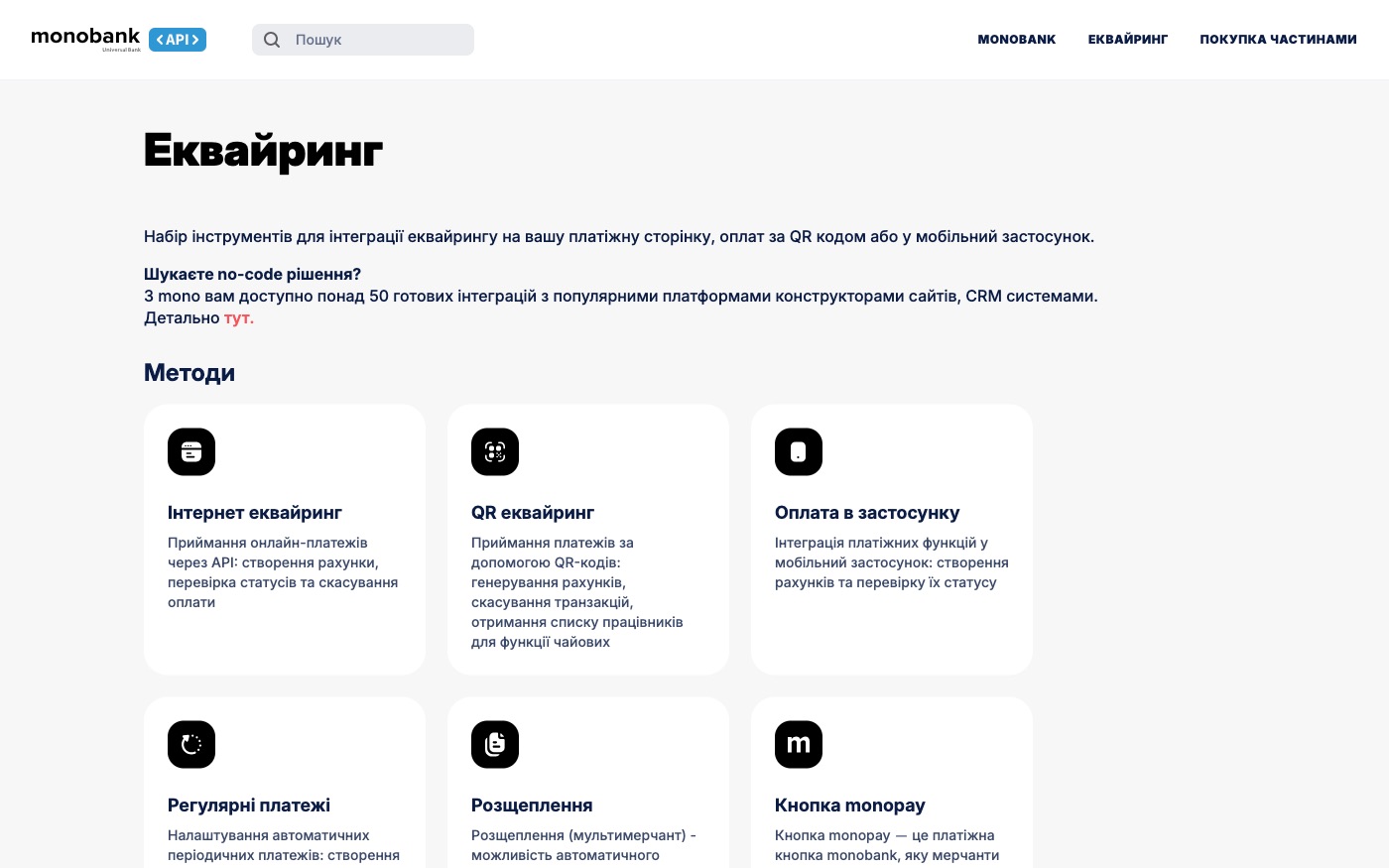
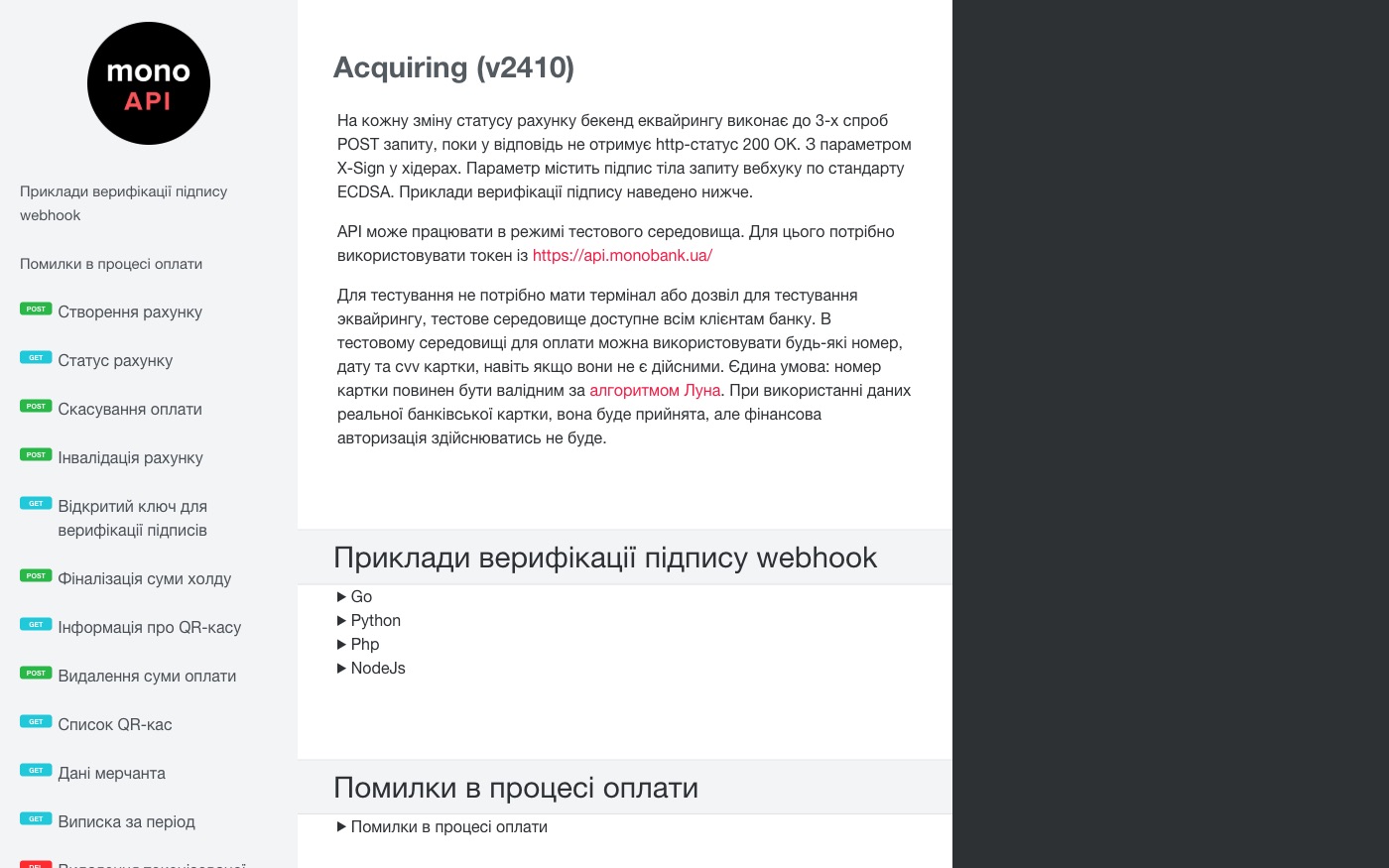
The payment flow needs testing before launch
Before testing a payment gateway usually means arranging a terminal or a special permission first.
After monobank's test environment is open to every bank client right away, and any test card number, date and CVV work for a trial payment.
03
An order is cancelled and part of it has to be returned
Before the refund and the return receipt are handled as two separate manual steps.
After one call cancels the payment, returns the money — fully or partially — and generates the return receipt at the same time if the cash register is connected.
04
One order actually covers several suppliers or partners
Before a marketplace receives the whole payment and manually works out how much each supplier is owed.
After the split feature automatically divides one payment between several recipients by rules set up in advance.
05
A receipt needs to reach Checkbox without an extra module
Before fiscalising a payment usually means connecting a third-party module between the payment system and the cash register.
After monobank connects to Checkbox directly from the monobank cabinet, so the receipt is fiscalised without any extra party involved.